

April 9, 2026 | Posted In Bus Stop and Transit Shelters, The Latest From Tolar: Blog
Is Your Bus Stop Working for the Riders Who Need It Most?
Tolar Manufacturing’s new white paper makes the case for rethinking how transit agencies decide where shelters go, and who gets left waiting in the heat.
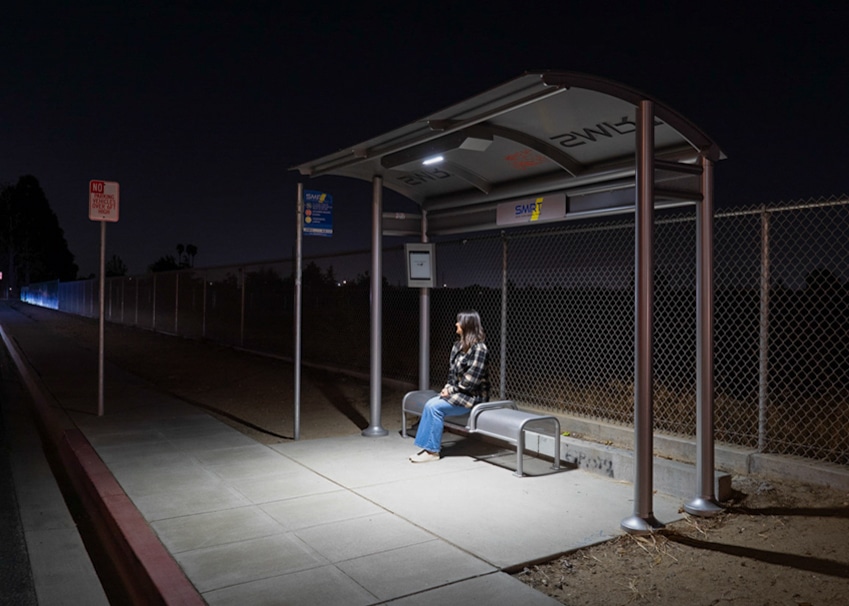
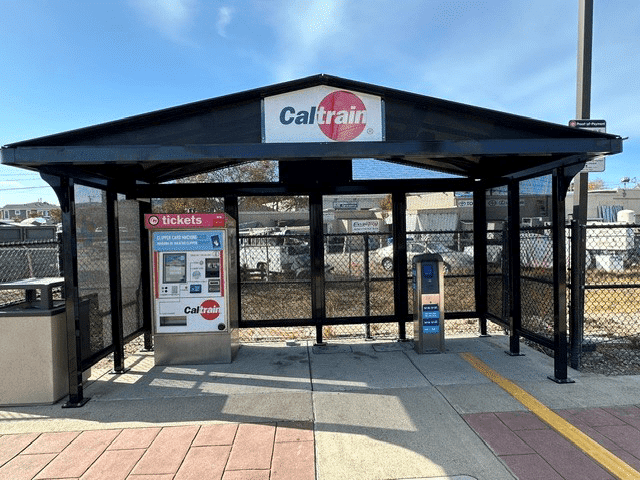


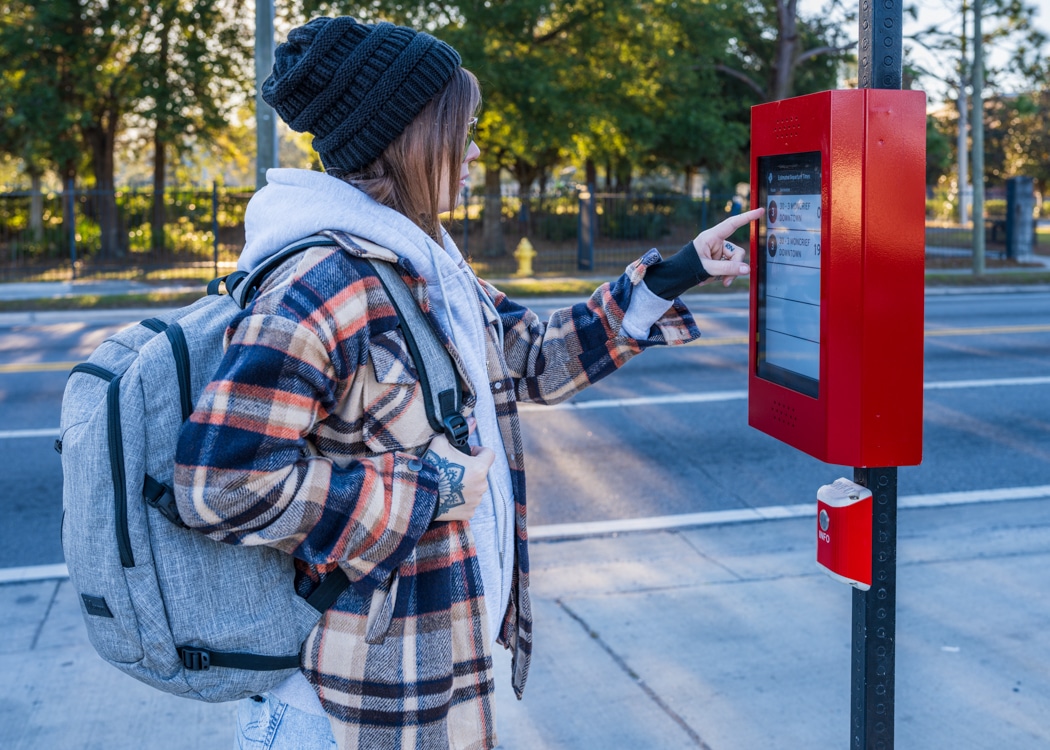
Across North America, most bus stops do not have shelters. According to a 2022 Washington Post analysis, only 20% of stops served by 16 of the nation’s largest transit agencies offer any coverage at all. For riders who have a car and a choice, that is an inconvenience. For the millions of people who depend on public transit to get to work, a medical appointment, or school, it is something else entirely.
For transit-dependent riders, seniors, people with disabilities, and low-income commuters, an unsheltered stop is not just uncomfortable. It can be dangerous. Research published in the International Journal of Biometeorology found that unshaded stops in dry-heat cities can reach surface temperatures between 125°F and 160°F. Full sun exposure can raise the perceived heat index by as much as 15°F compared to shaded locations. Between 2020 and 2023, at least 40 people died from heat at bus stops in Phoenix alone.
Tolar Manufacturing, the largest bus shelter and street amenities manufacturer in North America, has spent more than 30 years watching how these decisions get made. The conclusion: ridership numbers alone do not tell the full story.
That is the foundation of Tolar’s new white paper, Rethinking the Criteria for Placing Amenities at Bus Stops. It examines how transit agencies currently determine which stops receive shelters, where those frameworks fall short for transit-dependent riders, and what a more complete approach looks like in practice.
The white paper introduces Tolar’s Bus Shelter and Amenities Decision Matrix, a tool built to help agencies, cities, and transit departments factor in what actually affects the rider experience at the stop: headway times, heat index, service hours, proximity to social services, and rider population, alongside daily boardings. Depending on the stop, the right solution might be a full Sunset Series shelter, an EcoShade for a site with limited right-of-way, an EcoSeat with solar lighting for a compact footprint, or covered rest area and seating solutions that extend relief beyond the shelter itself.
The business case is real too. A 2021 University of Washington study found that adding shelters and real-time information can increase bus boardings by 80 to 200%. Better stops do not just serve existing riders. They attract new ones.
The white paper also pulls from research and real-world agency examples, including programs in Los Angeles, San Diego, and the Bay Area, to show what equity-forward planning already looks like on the ground.
Download the white paper here to get the full framework, including the Decision Matrix and Tolar’s recommendations for agencies looking to better serve their most transit-dependent riders.